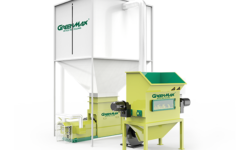
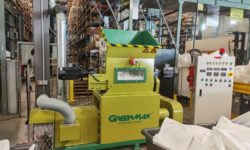
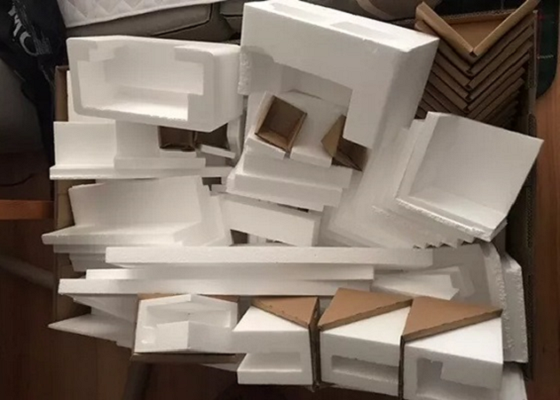
Now we often hear the word EPS, so what kind of substance is EPS? In general, EPS is a kind of foam, so we often call waste EPS waste EPS foam. EPS can be said to belong to our most common foam. Expanded PolyStyrene (EPS) is a white foam plastic material produced from solid beads of polystyrene. It is primarily used for packaging, insulation, etc. It is a closed-cell, rigid foam material produced from Styrene – which forms the cellular structure, and Pentane – which is used as a blowing agent. The furniture packaging, and vegetable and fruit packaging boxes that we commonly use in our lives belong to EPS, and the number is 6. When we observe this material, we can usually find that it is composed of countless small round particles, which is also one of the remarkable characteristics of EPS.

Why is EPS foam widely used in various industries?
First of all, EPS foam has many performance advantages, because of its lightweight, heat insulation, sound insulation, waterproof, impact resistance, and inert material, it is widely used in construction, aquatic products, agriculture, transportation, medical, food packaging, and other industries. In addition to the material properties, another reason for the popularity of EPS foam is its simple production process and low raw material prices. Low investment and high income naturally make EPS foam a sought-after field in all fields.
What are the specific applications of EPS foam in various industries? In the construction industry, EPS foam is often used in combination with flame retardants and cement as thermal insulation boards, waterproof boards, and sound insulation boards. In the aquatic field, EPS foam is often used to transport fresh seafood, with the help of ice packs, the seafood can be kept fresh. In the agricultural field, EPS trays are often used in breeding. EPS also maximizes its characteristics in the medical field. The packaging of our common vaccines and other medicines and even the containers for living tissue have the participation of EPS foam. In addition, because it is not prone to chemical reactions with other substances, it is also often used as the packaging of fresh food and cooked food.
Why develop waste EPS foam recycling activities?
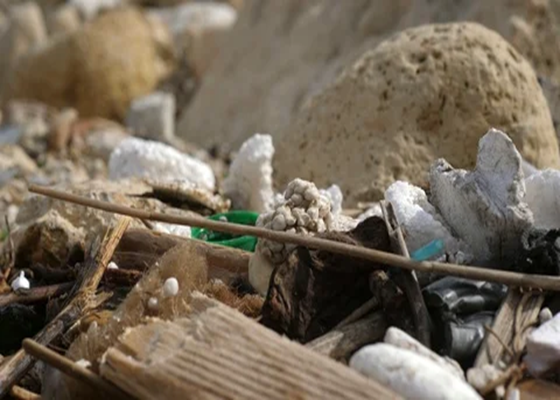
Because of the wide application of EPS foam, more and more waste EPS is produced. While people enjoy the convenience brought by EPS, they forget that we should do EPS foam recycling properly. Because EPS belongs to foam plastic. When it comes to plastic, our first impression is that it is not degradable. That's right, waste EPS can turn into non-degradable white waste that harms the environment if not disposed of properly. This not only has a serious impact on the beauty of the environment but also has serious harm to the animals and plants in nature, which will eventually endanger human beings.
In AFP's latest U.S. Styrofoam Recycling Report, approximately 39.7 million pounds of Styrofoam waste were recycled in 2018, compared to 25.9 million pounds in 2017. As for post-industrial recycling, 74.1 million pounds of Styrofoam were recycled in 2018. Although EPS recycling is increasing year by year, EPS foam recycling is far slower than waste, and we should continue to accelerate the pace of recycling.
Some people don't always think that EPS foam recycling is irrelevant. I believe that the information collected by GREENMAX will surprise you. Scientists have found EPS fragments in microorganisms in remote glacial areas, which means that EPS contamination has a wide range and It has already invaded the food chain. When new substances enter the ecosystem, this is actually a very dangerous thing. Perhaps EPS will become the carrier of unknown organisms (bacteria, viruses), and the habitats of animals and plants caused by EPS pollution It is not uncommon for cases of biological death to be destroyed, and even microplastics from EPS are gradually found in the placenta, blood, and feces of newborns. Hearing this, do you still think EPS foam recycling is an optional thing?
How to carry out EPS foam recycling?
Many people may be extreme when they hear this and think that we should completely ban the use of EPS, but considering various reasons, we can only minimize the unnecessary use of EPS. A rash ban on the use of EPS foam will impact small and medium-sized enterprises and adversely affect the economic development of various regions of the United States. So compared to banning, EPS foam recycling is a better way to solve waste EPS. The current mainstream recycling method is to make waste EPS into plastic particles, and then make them into new plastic products. During the entire recycling process, EPS recycling equipment is essential.
EPS foam densifier is highly recognized in the US recycling field. Of course, it is not the only recycling device in the entire EPS foam recycling process, but the EPS foam densifier is completely important and essential. Because EPS foam is bulky, it is expanded polystyrene obtained by PS foaming, so it needs to be reduced in volume before it is officially recycled. If the huge EPS is not pretreated, it is not only difficult to store, but also requires a lot of transportation costs. Most waste EPS is actually from the industry, so for businessmen, whether it is profitable is an important indicator for them to measure whether to carry out a project. If the recycling cost is greater than the profit, then most industries will abandon EPS foam recycling. Therefore, an EPS foam densifier is the key to recycling EPS.
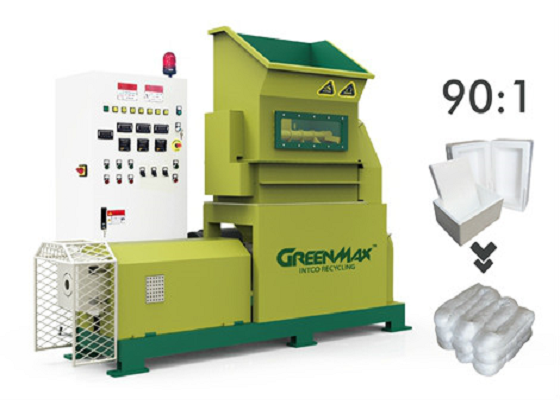
How does the EPS foam densifier recycle EPS?
GREENMAX EPS foam densifier mainly uses hot melt technology for EPS foam recycling,
Step 1
First, pour waste EPS into the crushing chamber of the EPS foam densifier. The crushing chamber is equipped with two sharp crushing knives, which can crush the huge EPS into pieces of uniform size.
Step2
These EPS fragments enter the heating device, are melted into a jelly, and are sent to the main material port through the screw
Step3
The melted waste EPS is extruded through the screen, and after cooling becomes a dense EPS ingot, the volume is reduced to 1/90 of the original

At present, EPS ingots are very popular in the market. Because the world is advocating the application of recycled plastic to new plastic products, the application amount is generally 25%-30%, so the reuse of waste EPS has become a popular industry. GREENMAX not only provides EPS foam densifier but also EPS foam recycling, providing a one-stop service. GREENMAX uses EPS to manufacture frame strips, which truly eliminates white pollution and realizes resource recycling. If you are interested in GREENMAX EPS foam densifier and recycling mode, please feel free to contact us!