As a professional foam recycling expert, Intco Recycling GREENMAX designs and manufactures recycling equipment that can recycle a variety of foams. These foam recycling machines use different recycling technologies, but all of them can be recycled well. As a well-known machinery brand, many friends in related industries may not know what kinds of foam can be recycled by Intco Recycling GREENMAX. In this article, let us take stock of how many kinds of plastic foam can be recycled by us
Table of Contents
EPS foam
EPS foam is a closed-cell foam with only 2% plastic and 98% trapped air, making it an effective insulator with little raw material. EPS foam may be molded into a variety of shapes, making it incredibly flexible. In general, it is more affordable than similar products. Additionally, it is entirely recyclable. Construction project insulation, electrical, and food service packaging, among other uses, are typical EPS applications.
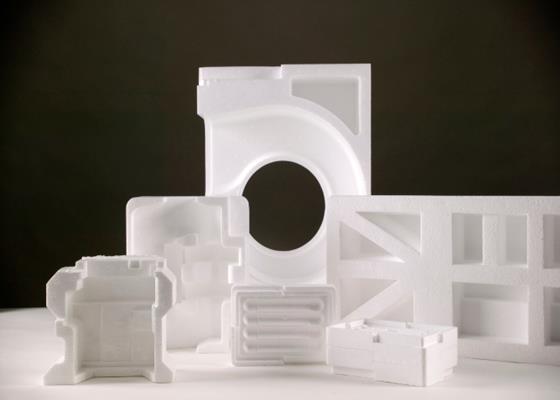
EPS foam can be regarded as one of the earliest forms that GREENMAX began to deal with. Because among the left and right foam packaging materials, EPS is the earliest, the most widely used, and the most used. This material is not only popular in various regions of the United States, but also a well-known plastic packaging all over the world. Currently, GREENMAX EPS foam densifier and EPS foam compactor are the preferred EPS recycling machines. Both have their own advantages. If you want to deal with EPS foam, then both machines can achieve the purpose, but because the technology used by the two EPS recycling machines is different, the two machines have their own advantages and disadvantages. Customers can decide whether to choose EPS foam densifier or EPS foam compactor according to their actual needs. (The picture below shows EPS foam densifier)

XPS foam
As polystyrene crystals, which are then mixed with unique additives and a gas blowing agent, XPS insulation is created. The components are introduced into an extruding device, where they are combined and melted into a thick liquid. A die is used to process the liquid, which is then inflated into foam, molded, cooled, and ultimately, trimmed.
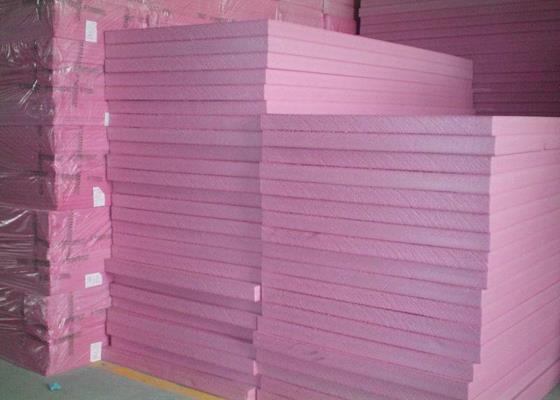
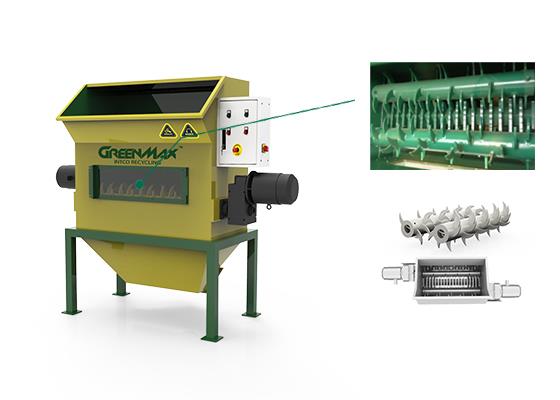
XPS is also one of the main types of foam recycled by GREENMAX. This foam is not as widely used as EPS. It is mainly used in the construction industry and is combined with flame retardants and cement to make thermal insulation boards used in housing construction. Industries that have XPS foam recycling needs generally include XPS foam insulation board manufacturers, XPS cutters, and construction waste recyclers. In general, both EPS foam densifier and EPS foam compactor can be used to recycle XPS foam. However, there are also rare cases where other special ingredients are added to the XPS foam insulation board, so it may not be suitable for recycling by hot-melt technology. In this case, we can use an EPS foam compactor for recycling. (The picture below shows the EPS foam compactor)

EPE foam
EPE foam is the name given to polyethylene-based foams. Similar to how expanded polystyrene foam is manufactured, it is often made from expanded pellets that are made with the aid of a blowing agent and then expanded into molds in steam chests. EPE rubber is particularly well-liked by consumers and producers for packaging. due to their versatility. Due to this adaptability, expensive products can be shipped safely in any situation.
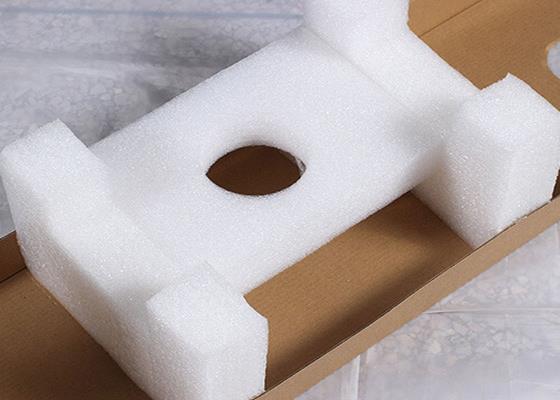
EPE foam is a foam packaging that has gradually emerged in recent years. Due to its stronger impact resistance than EPS foam, EPE foam is more elastic and more difficult to recycle. But the GREENMAX recycling machine can still recycle EPE foam. We can use EPS foam densifier and "enhanced" EPS foam densifier for recycling. (EPS foam densifier and EPS foam compactor can not only recycle EPS foam) EPS foam densifier melts and extrudes EPE foam to achieve the purpose of reducing volume and recycling. Since EPS foam compactor mainly adopts screw extrusion technology, it is difficult to compact high-elasticity foam. The "enhanced version" EPS foam compactor is equipped with a hot melt ring at the discharge port, which successfully solves this problem.
EPP foam
EPP is a highly versatile closed-cell bead foam that provides a unique range of properties, including outstanding energy absorption, multiple impact resistance, thermal insulation, buoyancy, water, and chemical resistance, exceptionally high strength-to-weight ratio, and 100% recyclability.
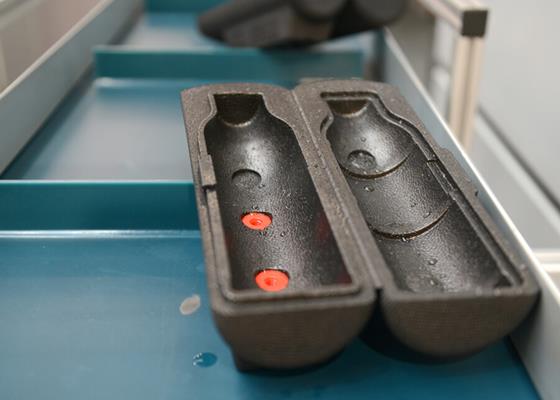
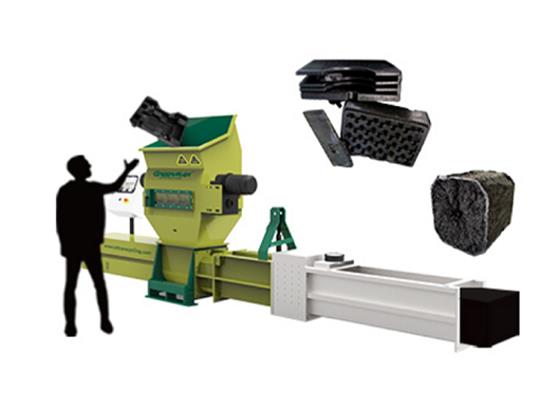
EPP foam is commonly used in the automotive industry. Due to its lightweight and high hardness, EPP foam is often used to make auto parts and reduce fuel consumption. For this kind of hard EPP foam, GREENMAX also recommends an EPS foam densifier and an "enhanced" EPS foam compactor. The same as the principle of recycling EPE foam, it is worth mentioning that there are few machines on the market that can use cold pressing technology to recycle EPP foam, but the GREENMAX "enhanced version" EPS foam compactor can do it. (The picture below shows the "enhanced version" EPS foam compactor)
PUR foam and EVA foam
A type of polymer known as polyurethane is made up of organic units connected by carbamate linkages. Unlike other popular polymers like polyethylene and polystyrene, polyurethane can be made from a variety of different starting ingredients.
This foam is often used to make mattresses and sofa cushions. Many furniture dealers are recycling waste PUR mattresses.

The closed cell ethylene-vinyl acetate copolymer foam known as EVA foam serves as an efficient replacement for a number of production-related products. Natural rubber, vinyl, neoprene, polyurethane, PVC foams, wood composites, felt, fiberglass, and mineral wool can all be replaced with it. The EVA foam material is known for its ability to produce excellent gloss and clarity, hold up well at low temperatures, withstand UV rays and stress cracking, and have waterproof hot-melt adhesive capabilities.
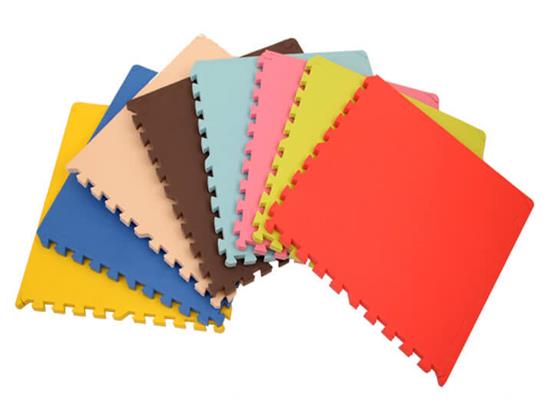
EVA foam may not be as common in our life as the foam mentioned above, but in recent years, customers in related industries have been consulting GREENMAX, but as far as the current situation is concerned, only foam crusher can crush PUR and EVA to achieve Reduce the volume and recycle. A foam crusher does not have a compression function, so it can only reduce the volume of foam to a certain extent, and cannot reduce the volume of foam to the maximum extent. It is not possible to recycle PUR foam with EPS foam densifier because pungent gas is generated during the recycling process. However, GREENMAX recycling equipment is constantly innovating, and it is entirely possible to achieve better recycling of different types of foam in the future.