Foam is widely used in packaging, construction, transportation and home furnishings, and its main types include polystyrene foam (EPS), extruded polystyrene foam (XPS), polyethylene foam (EPE) and polyurethane foam (PU). However, if a large amount of waste foam materials generated during use is not properly disposed of, it will not only cause waste of resources, but also cause pollution to the environment. Therefore, how to effectively recycle these foam materials has become an urgent problem to be solved.
In the new year, GREENMAX will continue to provide you with foam recycling solutions.
1. The challenge of foam recycling
Bulky
Foams are bulky and low-density, and are expensive to transport and store, requiring significant reduction in volume when handling.
The materials are varied
Different kinds of foams (e.g. EPS, XPS, EPE and PU) have different physical and chemical properties that require targeted technologies for recycling.
Difficulty of processing
The flammability and melting properties of foams place higher demands on the temperature control and safety performance of recycling equipment.
- Cold pressing technology to recover foam materials
Principles and features
Cold pressing technology mainly uses mechanical pressure to compress foam materials into high-density blocks, reducing their volume and facilitating transportation and storage.
Applicable materials: EPS, EPE, XPS foam and other lightweight materials.
Equipment core: The cold press physically compresses the foam through a screw or hydraulic compression mechanism, and no heating is required in the process.
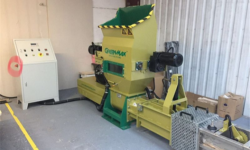
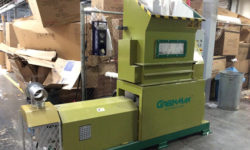
The GREENMAX foam screw compactor is a typical example of a compact with a compression ratio of 50:1.

- Hot melt technology to recover foam materials
Principles and features
Hot melt technology melts foam into a viscous form by heating at high temperatures, which is then compressed or molded into plastic blocks or pellets for easy reuse.
Applicable materials: EPS, XPS and EPE foam.
Equipment core: The hot melt machine is composed of a heating device and a compression system, which can efficiently melt and plasticize the foam.
A typical example of the equipment is the GREENMAX foam densifier, which uses heating to achieve the purpose of compression, and the compression ratio can reach 90:1.

4. Hydraulic technology to recover foam materials
Principles and features
Hydraulic technology uses high pressure to compact or shape foam materials, mainly for the treatment of foam waste with high-density foams or complex structures.
Applicable materials: PU foam, high-density XPS foam and other industrial foam materials.
Equipment core: The hydraulic press compresses or reshapes the foam material into high-density blocks or sheets by applying high pressure through the hydraulic system.
The GREENMAX foam hydraulic compactor is a typical machine with hydraulic technology, with a compression ratio between traditional cold pressing technology and hot melt technology, which can reach 70:1.

The use of cold pressing technology, hot melt technology and hydraulic technology to recycle foam materials is an important way to achieve resource recycling. Through the scientific process combination and advanced equipment support, it can not only solve the problem of foam waste disposal, but also create economic benefits for the enterprise, while significantly reducing environmental pollution. In the future, with the further development and promotion of technology, this recycling model will play an even more important role on a global scale.