In recent years, we have become very familiar with the recycling of plastics, and it seems to have become the main topic in the recycling field. However, after so many years, the recycling methods adopted by each country, the recycling laws and regulations formulated are different, and they have all reached the different effects. However, plastic recycling is indeed a difficult problem, but it is a problem worth noting in terms of the variety of types, and it is difficult to distinguish their types. It is also a difficult topic to study the methods required for recycling. For example: PET is different from HDPE, HDPE is different from PVC, PP and PS, and soft plastic (LDPE) is also completely different. Today we will introduce how to identify, recycle and reuse waste PS.
Table of Contents
What is EPS foam plastic?
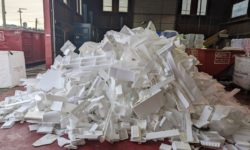
First of all, PS is divided into whether it is foamed or not. Foamed PS is often used as packaging for manufacturing products, because this foamed PS has the characteristics of shock absorption, heat preservation, and waterproof. Foamed PS can become EPS, expanded polystyrene, expanded PS or styrofoam are all the same material. They can usually be represented by the number 6. Raw beads are expanded using steam to form pre-expanded beads, which are then cured in large bags before being transported into moulds. Once in the mold, the pre-puffed beads are again steamed into pieces. The blocks are then placed on the storage floor to age for the appropriate amount of time before being cut into various shapes and sizes to suit specific project needs.

How to recycle EPS foam plastic?
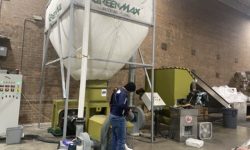
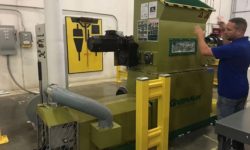
The main feature of EPS is that it is full of air, which is one of the main reasons for the good performance of EPS. If you want to recycle EPS well, the best EPS recycling solution is to use appropriate recycling equipment. Now related industries in the United States and Australia are more inclined to use EPS densifier for recycling. EPS densifier is currently the equipment with the highest compression ratio among all recycling equipment produced by GREENMAX, and the compression ratio can reach 90:1.
The reason why EPS densifier can be welcomed by people is because of its high compression ratio and relatively simple operation method. Compared with EPS compactor A series equipment, this EPS densifier M series is very convenient to operate. First turn on the machine, then put the EPS foam plastic into the EPS densifier silo, the sharp crushing device will crush the EPS into pieces of uniform size, and then with the rotation of the screw, these EPS pieces are sent to the heating device After being heated and melted, it is extruded, and most of the air is smoothly discharged. After compression, these EPS are soft and gelatinous, with high heat, and cannot be directly touched by hands without any protection. After cooling A dense ingot will be formed.

Reuse of EPS
In addition to providing EPS densifier, GREENMAX also provides excellent EPS recycling solution. In addition to selling EPS densifier, we also help buy back EPS ingots. Plastic pellets are produced in an independent factory. This one-stop service fulfills the demands of many customers for a total EPS recycling solution, which is also the special feature of GREENMAX recycling service. Waste EPS processed by hot-melt technology can be sold at a higher price, because of its high density, it is favored by downstream buyers. This material saves transportation costs and storage space, and has become the most popular in the recycling market. recycled material.