
Source and classification of foam waste
The service life of EPS foam materials is relatively short. About 50% of EPS foam products have a service life of only 2 years, and 97% of EPS foam products have a service life of no more than 10 years, resulting in an increase in EPS foam waste year by year.
In terms of product types, EPS foam waste mainly comes from disposable foam packaging materials, foam shock-absorbing materials, disposable lunch boxes, disposable containers, household goods, children's toys, pipes, insulation boards, building materials, and machine head leftovers during factory processing. The recycling process can be classified according to the product source, form, material property, impurity content, moisture content and purity of raw materials of waste EPS foam.
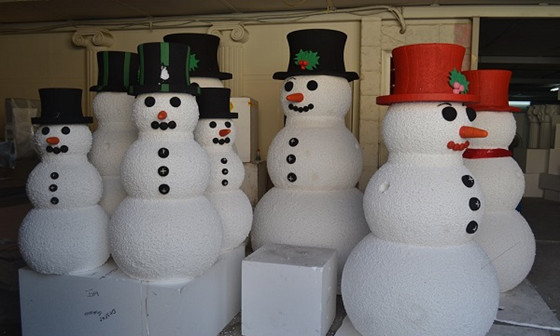
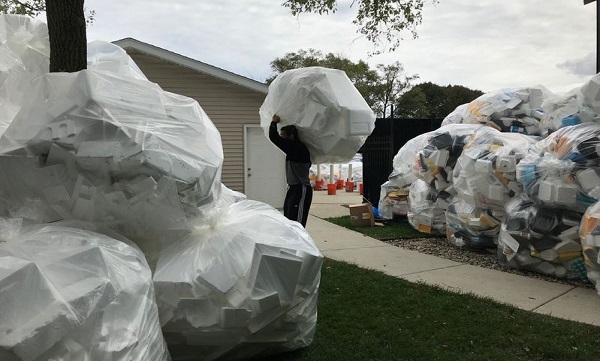
According to the source of products, they can be divided into: single plastic products, similar plastic products and mixed plastic products. The former two have high recycling value and can be used to make high-quality PS particles. Single plastic products such as PS foam fish box and leftover materials of large enterprises; Similar plastic products, such as packaging materials and damping materials for household appliances; Mixed plastic products, such as various PS waste foams recycled in the recycle bin.
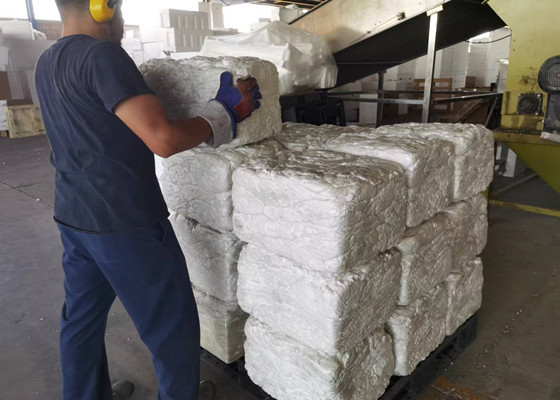
It can be divided into: uncompressed foam, cold compacted foam and hot-melt ingots The direct recycling and transportation cost of uncompressed PS foam is high and the production efficiency is low.
According to the material properties, it can be divided into: pure PS foam, PS foam containing flame retardant, PS foam containing PE, PS foam containing EVA, etc.
In addition, the recycled materials can be comprehensively evaluated according to the source, material property, form, impurity moisture content and other information of PS waste foam plastics, and can be divided into different grades such as first-grade, second-grade, and third-grade. The grading recycling of PS waste foam plastics can improve the economic benefits of the recycling enterprise, and at the same time, it can maintain the performance indicators of the recycled materials to the maximum extent, and make the best use of it.
Foam should not enter the natural environment, EPS foam recycling overview
EPS foam has excellent and durable thermal insulation, unique cushioning shock resistance, aging resistance and waterproofness, so it is widely used in construction, packaging, electrical and electronic products, ships, vehicles and aircraft manufacturing, decoration materials. , housing construction and other fields have been widely used, which greatly facilitates our lives. However, more than 50% of them are electronic and electrical shock-absorbing packaging, fish boxes and agricultural products and other fresh-keeping packaging. These products are discarded after one-time use. Because EPS has bacteria resistance, weather resistance, and corrosion resistance, it can withstand 300% in aerobic conditions. It takes years to fully degrade, and a large number of waste foam plastics are scattered in the natural environment, becoming "white pollution" that affects the living environment of the earth.
Since the 1980s, 8 states in the United States, Japan, South Korea, Taiwan Province of China and other countries and regions have legislated to prohibit or restrict the use of polystyrene foam tableware. In 1999, the former State Economic and Trade Commission of China also issued Order No. 6 to prohibit production and use. However, various prohibitions and restrictions have not effectively improved the problem of white foam pollution. Through continuous exploration and practice, countries have gradually solved the problem of recycling waste foam plastics through continuous exploration and practice, and through technological progress and innovation, making large-scale EPS foam waste recycling possible.
At present, the world produces about 12 million tons of EPS foam every year. Except for a few developed countries, waste PS foam materials in most countries and regions have not been effectively recycled. According to incomplete statistics, the current PS foam recycling rate in Nordic countries and Japan is 72%, that in South Korea is 64%, and that in other countries and regions is only 10-30%.
EPS foam recycling technology
1. EPS foam incineration to recycling heat energy
Heat recycling by incineration is to put waste polystyrene plastic into a special incinerator to burn and recover heat to replace part of the fuel. The calorific value of polystyrene is as high as 4600kj/kg, which exceeds the average calorific value of fuel oil of 4400kj/kg, and can partially replace the fuel of iron making, power generation and combustion boilers. Although the combustion method can obtain energy, it needs to use a special combustion blast furnace, otherwise the insufficient combustion of polystyrene will produce styrene, dioxin and other harmful substances, causing secondary pollution to the environment. The cost of incineration recycling device is high, and the use value of materials has not been fully utilized.
2.EPS foam compression granulation
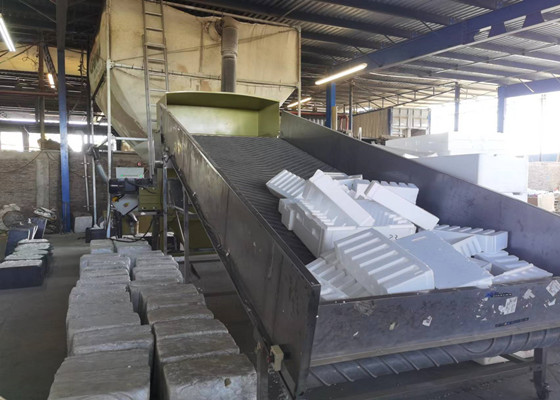
EPS foam hot melt compression granulation is the most widely used EPS recycling treatment method at present. After the EPS foam waste is compressed or melted by a professional foam densifier, it will form compact foam compression blocks. These foam blocks are easier to sell than the waste foam loose material, and the price is about 2 times. Foam compressed block can be used for granulation to produce high-quality EPS regenerated particles, which can be applied to the production of new foam products again. If you have any questions about EPS foam recycling, please contact us:lucyshen@styrofoamdensifier.org.
3.Recovery of styrene monomer by chemical pyrolysis
EPS is easily decomposed into aromatic compounds at high temperature. Waste polystyrene foam can be decomposed into gaseous products such as C1-C4 hydrocarbons and liquid products such as styrene and aromatic hydrocarbons by high temperature pyrolysis. At 580 ℃, EPS can be decomposed into 65% styrene monomer and 10% oligomer. The chemical thermal cracking method is one of the ways of high-quality recovery. Its disadvantage is that the energy consumption in the recovery process is large. In the process of industrial production, there are still problems of low recovery rate and easy carbonization and accumulation of materials on the recycling equipment.

