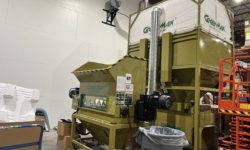
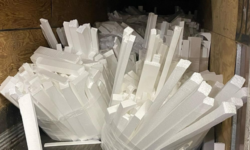
Ithaca, N.Y. - A complete ban on some polystyrene products will be in place for the New Year. For example, the sale of packing peanuts, take-out containers, coffee cups and all products that use foam polystyrene are being phased out, and polystyrene manufacturing in these related industries will cease. Very fortunately, many companies around the world have been exploring the path of polystyrene recycling, such as polystyrene recycling experts GREENMAX has developed a professional polystyrene recycling machine.
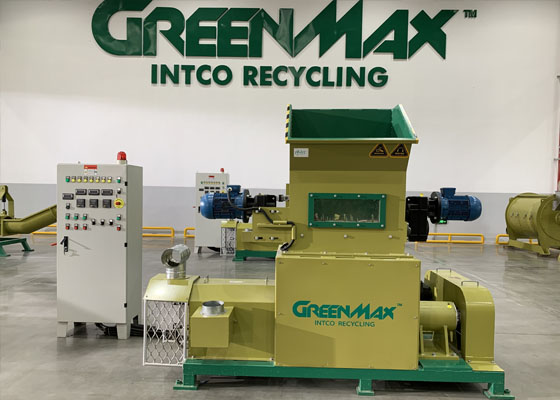
Conn's is an American furniture store based in Texas, USA, whose main products are mattresses, appliances and some other household appliances. Prior to encountering GREENMAX, waste polystyrene from Conn's seven distribution centers was simply thrown away. But given the environmental concerns and the fact that polystyrene is very expensive to recycle, the company decided to look for other methods. After a thorough market research, the company chose to work with GREENMAX and purchased three polystyrene densifiers, increasing efficiency and saving the company recycling and transportation costs.
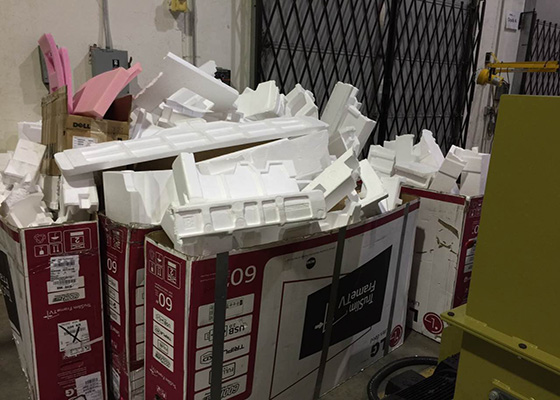
Another GREENMAX client, John Ventresca, is a company that provides masonry and architectural prefabrication services for private homes and offices. Polystyrene is one of the core materials they use to provide their services. Due to the increasing volume of business, there was a growing amount of residual polystyrene trim that was taking up a lot of storage space. Not disposing of this excess polystyrene in a timely manner was causing the company many problems and they were eager to find a new solution. After much consideration and comparison, the company found GREENMAX.
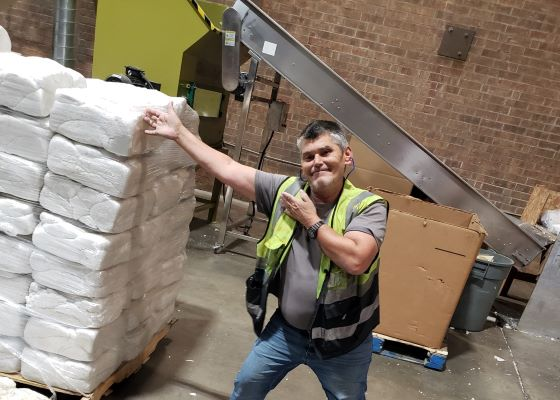
The company learned that there were more environmentally friendly disposal options than going to a recycler and burning polystyrene in a landfill, as well as learning how the recycling machine worked. After further consideration, the company purchased the polystyrene densifier, an easy-to-operate, efficient machine that can quickly process waste polystyrene, and the company's worries were largely solved.
This polystyrene recycling machine has changed the fate of polystyrene in landfills and has contributed to a certain degree to the sustainable development of society. When we understand that polystyrene is made up of 2% actual plastic and 98% air, all that is required to recycle polystyrene is to squeeze the air out of the polystyrene and reduce the volume of the polystyrene. The polystyrene densifier can achieve exactly this situation.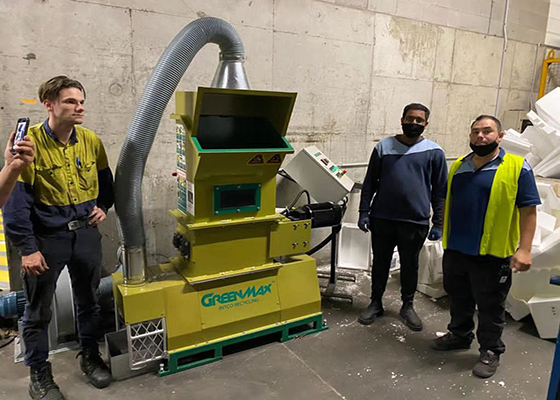
The compressed polystyrene briquettes are ready for the next recycling step - pelletizing. These polystyrene briquettes are the raw material for the plastic pellets, which can be made into end products for direct sale on the market. Ultimately, these steps form a tight recycling loop, keeping waste polystyrene out of the ecosystem and avoiding damage to the climate, oceans and soil.
When waste polystyrene no longer pollutes the environment, it is a very valuable material and to some extent sustainable, or a big step towards sustainability. In this process, the polystyrene recycling machine plays an important role.