Plastic is killing marine life. According to Oceana statistics, at least 2.1 to 34 billion single-use plastic products end up in the ocean each year. This plastic waste in the ocean is causing illness, death and even endangerment of marine life. The statistics are appalling, but they are a wake up call to environmental awareness for most people. In 2018, Coca-Cola, one of the world's leading brands, launched its "World Without Waste" campaign and pledged to recycle one used plastic bottle for every one sold.
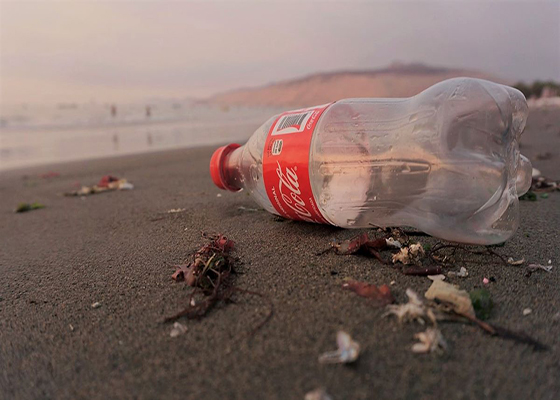
It has also introduced 100% recycled bottles for some of its products in some North American markets. The move will reduce the use of virgin plastic by 20% compared to 2018, a step in the right environmental direction that doesn't solve the plastic pollution problem. Reducing plastic use at the source is one option, but isn't recycling plastic and converting it into a usable product in another form a better option?
In fact, there are several kinds of plastics, some of which can be 100% recycled, such as foam, which can also be called styrofoam, polystyrene, etc. Nearly 98% of the foam is made up of air, and 100% recovery of zaili can be achieved by squeezing out all this air. The way to deal with foam in today's environmental era no longer supports the initial incineration and landfill methods. These methods often have a bad impact on the environment and climate, and occupy valuable land resources for hundreds of years.

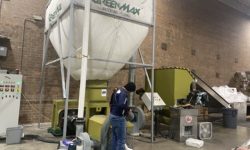
With the rapid development of technology at any time, people have turned their attention to the advanced equipment specialized in handling foam. These professional foam recycling machines have brought great convenience to countless enterprises and made the recycling business less daunting.
This foam recycling machine uses two key steps, crushing and screw extrusion, to squeeze out all the air from the foam and make compact blocks or ingots. Specifically, There are two main types of recycling machines. They are foam compactor and foam densifier. The former is a type of screw compactor and is based on the principle of advanced cold pressing technology. The foam is first crushed and then physically compressed by means of a screw. In contrast, the latter is a machine that uses hot-melt technology. First, the foam is also crushed and squeezed through the screw, but the foam is melted in the screw and extruded through the discharge port. The two machines work differently, but both compress large amounts of foam into smaller blocks and ingots.
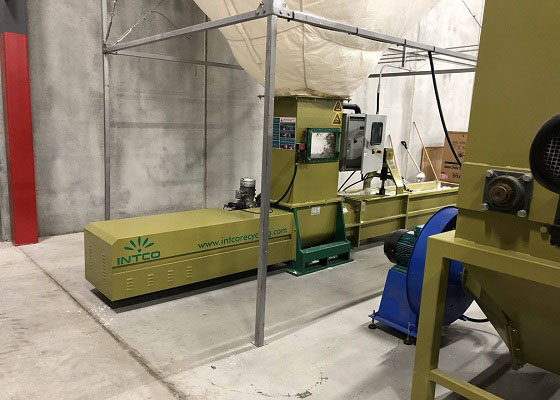
The advantage of the foam compactor is that it has no odor when it is compressed. Even if there is residual water in the foam, it can continue to be processed, such as fish boxes, fruit and vegetable boxes, etc. These items will inevitably have some water stains attached to them during the collection process and there is no way to remove them and air dry them. In addition, because foam compactor does not have a heating step in the compression process, it is more energy efficient. This compression technology does not destroy the internal physical properties of the material and keeps the properties of the foam intact.
Foam densifier has the advantage of being simpler and more efficient to operate than a compactor. No other factors need to be considered during the working process, only temperature adjustment is required. The density of the material after hot fusion is higher than the former, and the compression ratio is as high as 1:90. We can choose different machines according to the type of foam and our business needs.

As the world works to reduce emissions to mitigate climate change, much of the focus has been on energy. Despite the critical importance of this work, the impact of plastics such as foam on the climate crisis has gone largely unnoticed. The sad truth is that plastics such as foam have largely contributed to the climate crisis.
As mentioned above, we need to do more than just reduce the sources of plastic, we also need to do more to prevent 100% recyclable plastics like foam from entering the ecosystem after disposal and killing marine life and taking up valuable land resources. For such items that can be recycled completely by the power of science and technology, we should make good use of advanced foam recycling machine to recycle them to the fullest.