
California is the first state to pass comprehensive legislation covering both plastic reduction and plastic recycling. When it comes to reducing plastic use, the law requires a 25% reduction in single-use plastics by 2032 and a 25% reduction in expanded polystyrene by 2023. In terms of recycling, the document requires that at least 30% of plastics in California will be recycled by 2028. These targets for expanded polystyrene are even more aggressive and are increasing regularly. If producers fail to meet the cut rates, the material will be banned entirely. Finally, by 2032, 65 percent of all plastics sold or distributed in California must be recyclable. Any entity that fails to comply with the new law will face fines of up to $50,000 per day.
In the recycling process of plastic foam, we often encounter many different types of foam, not limited to the polystyrene foam we mentioned above. The recycling of polyethylene foam has gradually been understood and valued by the public. As for the recycling of polyethylene foam, we can also follow California's two recycling ideas for all types of plastics. On the one hand, it is to minimize the unnecessary use of polyethylene foam, and on the other hand, it is to strictly control the recycling of polyethylene foam.
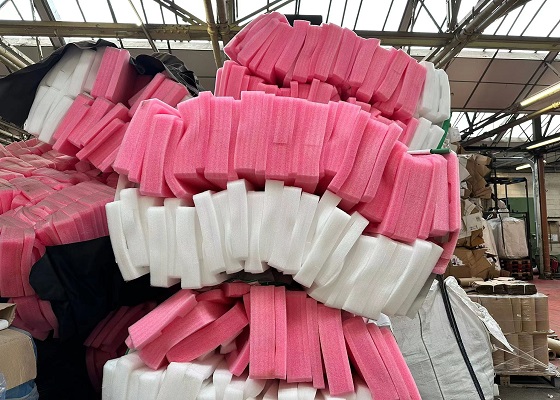
Three hundred million tons of plastic are produced globally every year. Less than 10% of plastic waste in the United States is recycled each year. With plastic production expected to triple over the next 40 years, public concern about plastic pollution is about to reach its peak. This is why more and more people are beginning to take the initiative to learn about the recycling of polyethylene foam. Currently, you can choose to use polyethylene foam densifier and polyethylene foam compactor to recycle polyethylene waste.
Polyethylene foam densifier for recycling
One of GREENMAX's partners is a car brand we are very familiar with, Tesla. The brand contacted GREENMAX through a third party and expressed its desire to recycle EPE car packaging materials. We also introduced polyethylene foam densifier and polyethylene foam compactor to the customer. After introducing previous customer cases and video demonstrations of the equipment's work, the customer finally chose polyethylene. foam densifier M-C100E for recycling. Polyethylene foam densifier uses hot melt technology, which is generally used to recycle non-cross-linked EPE foam. It uses crushing, heating, and melting to compress EPE. The compression ratio can reach 90:1. It is an ideal equipment for recycling polyethylene waste.
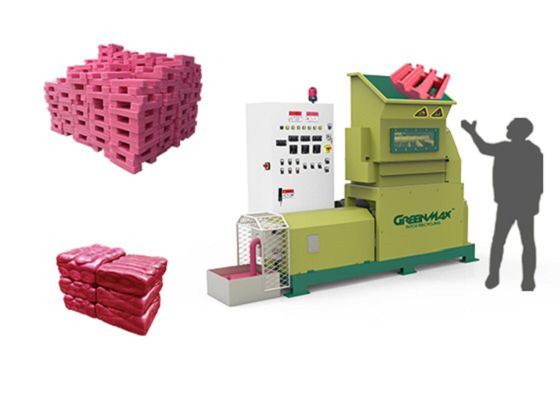
Polyethylene foam compactor for recycling
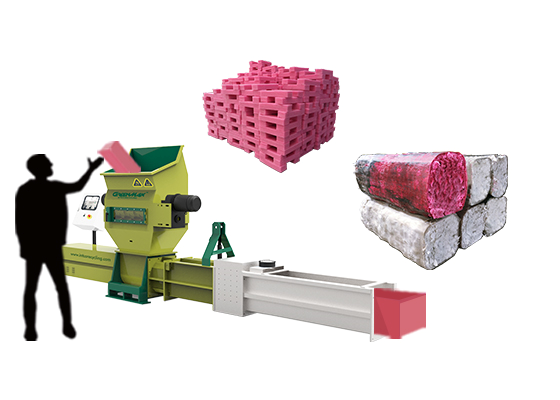
Some users may think that using Polyethylene foam densifier for recycling is the first choice. In fact, this is not the case. Polyethylene foam compactor can also complete recycling tasks excellently. Although it is dealing with highly elastic EPE foam, the Polyethylene foam compactor is equipped with a hot melt ring at the discharge port to help heat the surface of the blocs and help them compact more tightly. The compression ratio of this device is 50:1.
In addition to the types of solutions mentioned above, technical and social solutions to the plastic problem are also rapidly developing, including through innovation, product design and environmentally friendly alternatives. The regulatory environment will evolve rapidly to keep up. At the same time, efficient recycling equipment should also keep up with the pace of recycling.