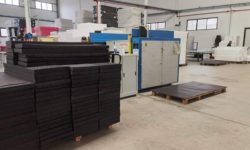
Expanded polypropylene foam is often referred to as EPP foam. The application of this material is gradually becoming more and more widespread. We don’t seem to have a very thorough understanding of it. In fact, it has many excellent properties. Compared with other packaging materials, There are also many unique advantages.
The rigidity of polypropylene (PP) is better than that of polyethylene (PE). The flexural modulus of PP is about 1.52Gpa, while that of PE is only 207Mpa. Its chemical resistance is similar to that of PE. Polypropylene has a glass transition temperature lower than room temperature, has better impact resistance than PS, is as easy to recycle as PS foam, and is an environmentally friendly material. Polypropylene has a high heat distortion temperature and can be used in some high-temperature fields. Foamed polypropylene can usually withstand high temperatures of 130°C, which is much higher than the maximum use temperature of polyethylene foam of 80°C. The closed cell structure prevents thermal conductivity from being affected by moisture, so it can be used as a thermal insulation material.
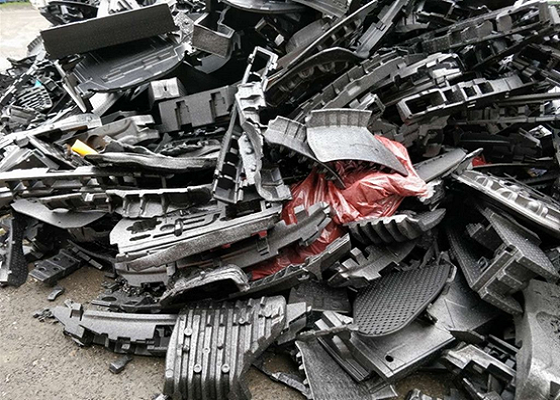
Not only is it resistant to high temperatures, this material also has excellent performance in low-temperature environments: it can be used even at -30°C. Because polypropylene foam products have good energy absorption properties and excellent compression resistance, they are widely used in automobile bumper energy treatment systems and other anti-collision energy-absorbing parts. Not only that, polypropylene also has high stability in size and shape: PP foam products will quickly return to their original shape after being deformed by multiple continuous impacts without permanent deformation. Due to its light weight and ability to be used repeatedly, it is widely used in the automotive industry, and surveys in recent years have indeed shown that the application rate of foamed polypropylene in the automotive industry has increased significantly.
Table of Contents
How to recycle expanded polypropylene?
If you prefer to use cold pressing technology, which can also be called screw extrusion technology, for recycling, then you must not miss the polypropylene foam compactor recycling equipment, which we also call environmentally friendly equipment and energy-saving equipment. Because in the entire recycling process, unlike chemical recycling methods, which require chemical reactions and adding catalysts and other substances, there is no need to overuse new resources. At the same time, because it is a cold pressing technology, there is no need to treat the polypropylene foam compactor during the recycling process. For preheating, there is no need to convert electrical energy into heat energy (regardless of the heat generated by the machine itself during operation), so it can be regarded as a relatively energy-saving recycling equipment.
What is the recycling effect of polypropylene foam compactor?
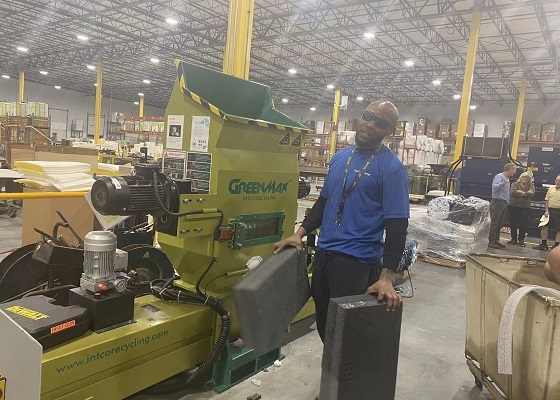
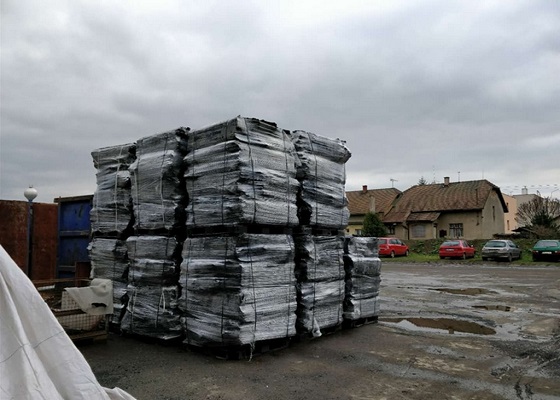
GREENMAX polypropylene foam compactor helps with recycling primarily through compression. It shows that the expanded polypropylene is crushed and then extruded into tight cuboids using twin screws. The heat exchange device at the outlet will heat and melt the surface of the blocs to help the compression become tighter. The compression ratio of polypropylene foam compactor is 50:1.
Does it make sense to recycle expanded polypropylene?
It makes sense to use polypropylene foam compactor to recycle polypropylene, both from the perspective of environmental protection and resource recycling. Polypropylene is a valuable renewable resource after recycling, but if it is not recycled properly, it will cause serious non-degradable plastic pollution. Therefore, we should use appropriate recycling equipment to help renewable resources regain a new life.