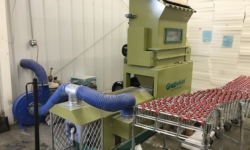
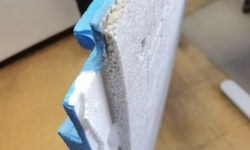
Foam materials are widely used in packaging, construction, home furnishing, fishing, medical industry, agriculture and many other fields. However, these foam wastes place a huge burden on the environment. Traditional landfilling and incineration not only waste resources but may also cause pollution. As an innovative technology, Foam melter provides an efficient and environmentally friendly solution for recycling all types of waste foam.
Table of Contents
How foam melter works
Foam melter converts bulky waste foam materials into high-density, reusable blocks through heating and compression. These blocks are significantly reduced in size, making them easier to transport and store, and can be further processed into a variety of new products.
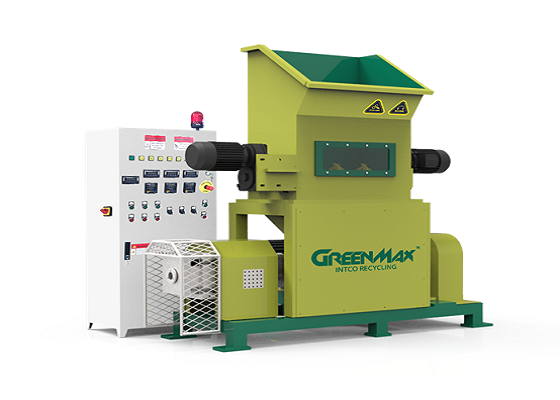
Recycle all types of waste foam
Foam melter for EPS foam
Application areas: widely used in food packaging, disposable cups and bowls, electronic product protection, fishery, etc.
Recycling process: EPS foam is first crushed in the foam melter, then heated to a softened state, and transformed into compact blocks through screw extrusion. The blocks can be reused to make building materials, plastics and other high value-added products.

Foam melter for XPS foam
Application fields: Mainly used for building insulation materials.
Recycling process: XPS foam has a higher density but can be processed in a foam melter in a similar way to EPS. After being melted and compressed, XPS foam can be remade into insulation panels, decorative materials, and more.
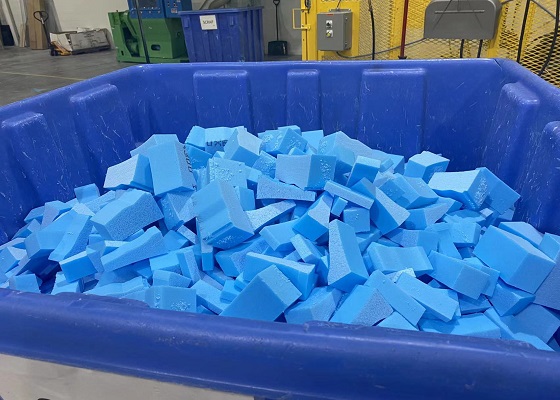
Foam melter for EPE foam
Application areas: fruit packaging, precision instrument packaging, winding packaging of fragile products.
Recycling process: EPE foam has high elasticity. Although it can be compressed using cold pressing technology, more people prefer to use hot melt technology to compress it. GREENMAX foam melter can compress it to one-90th of its original volume.
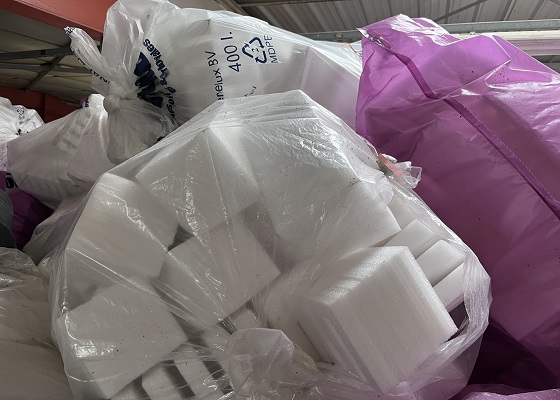
Foam melter for EPP foam
Application areas: automotive industry.
Recycling process: EPP foam is commonly used in the automotive industry. Because of its light weight, it is widely used. The recycling process is similar to other types of foam.
Advantages of Foam melter
Reduced transportation costs: By converting bulky foam waste into high-density blocks, transportation and storage costs are significantly reduced.
Environmental protection: Reduce foam waste from entering landfills and reduce the risk of environmental pollution. At the same time, energy consumption during the recycling process is relatively low, helping to reduce carbon emissions.
Resource reuse: The converted foam materials can be used in the manufacture of a variety of new products, fully realizing the recycling of resources.
How to achieve large-scale use of Foam melter?
Establish a recycling network: A comprehensive foam waste recycling network should be established in various places to facilitate residents and businesses to put in waste foam materials.
Promote Foam melter technology: Increase the promotion of Foam melter recycling technology and increase the recycling rate of various foam waste materials.
Policy support: The government should introduce relevant policies to encourage companies to invest in foam recycling equipment and provide necessary technical support and financial subsidies.
Foam melter provides an efficient, economical and environmentally friendly solution for recycling all types of waste foam materials. By widely applying this technology, we can not only reduce environmental pollution, but also achieve recycling of resources and promote the development of green economy. All walks of life should work together to promote the development of foam recycling and contribute to building a sustainable future.