
After negotiations over the past two years in 2018, EU countries have agreed on landfill and waste utilization targets, which will undoubtedly promote the development of a circular economy in Europe.
According to the target of the new agreement, 55% of household waste will be recycled by 2025; this proportion will increase to 60% in 2030; and 65% in 2035. In addition to this, for the first time the EU has regulated the amount of waste allowed to landfill in each member state: the target is 10% by 2035.
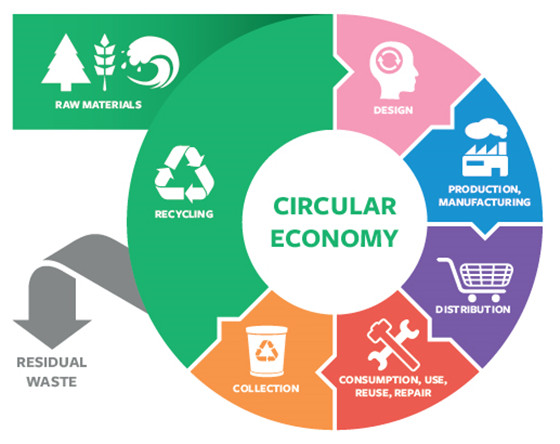
In addition to addressing the disposal and recycling of household waste, the new agreement also addresses requirements for the reuse of packaging waste.
Turn needs into benefits
The six agreements cover the disposal of waste, packaging waste and rubbish. This also places new demands on governments and businesses.
This new agreement requires municipalities to recycle organic household waste and companies to ensure that the packaging they produce is recyclable. Both tasks are very challenging, but we will do our best to ensure that they are achieved in a reasonable manner. Because it makes a lot of sense for the environment and the economy."
Polystyrene (PS) foam is an insulating material widely used in the construction industry. In Europe, expanded and extruded polystyrene (EPS and XPS) have been in use since the 1960s. To meet fire safety regulations, flame retardants are added to PS foam.
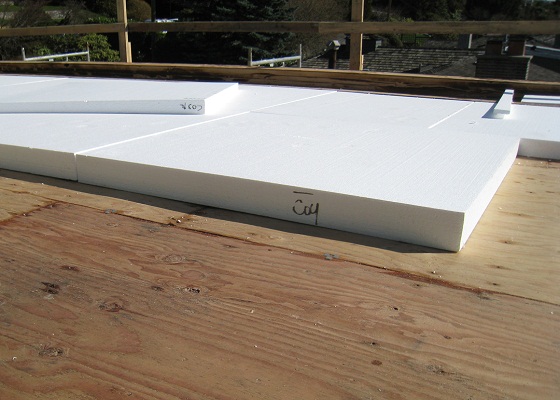
Due to their bulky size, EPS products tend to fill up the litter box in no time, resulting in higher waste disposal costs.
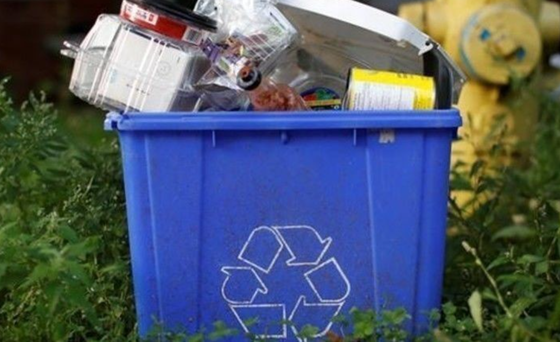
New EU policies are forcing recycling companies to speed up their development. Recycling companies must act. But in the current high-cost environment, it's going to be very difficult to pick up the pace. How to solve it? Need to reduce costs for various processes, such as choosing an economical EPS densifier when you decide to dispose of recycled EPS waste.
In response to the market's need for savings, the INTCO Recycling research team focused on developing the GreenMax brand of EPS densifiers to find the best way to reduce costs. Fortunately, INTCO Recycling's proud new project landed and received warm applause from customers.
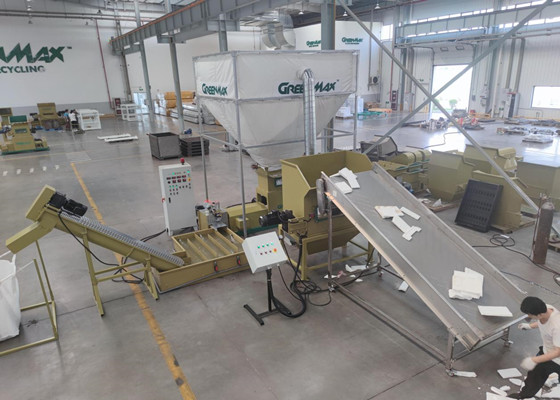
Of course, the above items show that one person is enough to operate the system. Typically, small EPS screw compactors require at least two operators for compaction and collection. Thus saving the labor cost of 1-2 operators. So if you're in Europe, you can save at least €1,000 per month.
This machine can reduce EPS waste by 90:1. This means that 90 cubic meters of EPS ingots become 1 cubic meter after being processed by the system. As a result, the transportation costs associated with the transportation of these ingots are correspondingly reduced by a factor of 90.
More importantly. After melting, EPS waste, although it comes from waste dirt, can be sold and processed into new products rather than being deposited in landfills. Therefore, it not only protects the environment, but also saves storage costs and environmental stress and costs.

EPS densifiers designed for automatic operation first shred the EPS through a compression mechanism and then melt it into a dense mass.
Living Spaces, the largest furniture manufacturer on the West Coast of the United States, started working with GreenMax as early as 2016.
The reason is that Living Spaces 18 has a lot of foam to dispose of, and they gave it to the recyclers at the time for free in the beginning. Later recyclers started and charged them to dispose of these foam wraps. So they searched for EPS recycling solutions on Google, and found an EPS recycling expert —GreenMax.
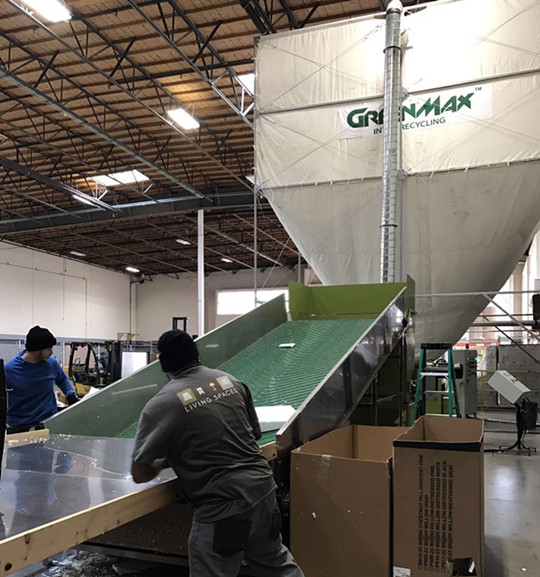
Living Spaces purchased a GREENMAX Mars C300 large-scale melter system in March 2016, the first attempt to dispose of waste packaging by itself. The thermal fusion was excellent, and Living Spaces was pleased with the GREENMAX Mars C300 EPS densifier, and in Q4 2016 ordered two more M-C300 for other locations, one of which has been shipped to Silicon Valley for use.
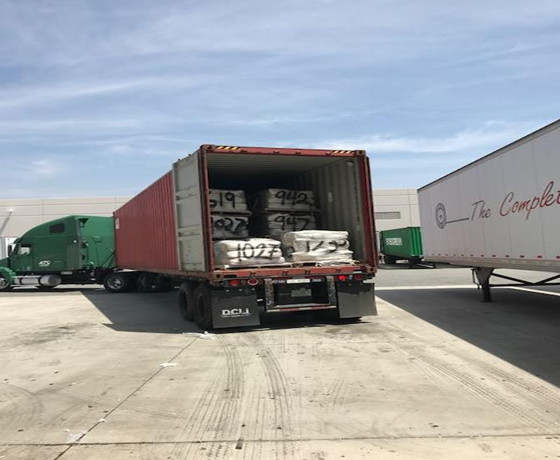
EPS hot melts into a block that can be sold or reworked into plastic parts for picture frames, baseboards, and more. If you have questions about recycling, please contact GREENMAX.

