
The Washington State Legislature passed Senate Bill 5022, which, among other provisions, prohibits expanded polystyrene (EPS) food service packaging. U.S. plastics manufacturers urged Governor Inslee to reject the rule, issuing the following statement:"We urge Governor Inslee to reject the erroneous restriction on EPS foodservice packaging by removing this provision from the legislation through a project veto. If implemented, the ban would force EPS to be replaced with alternatives that are often more costly and have a greater environmental impact. "
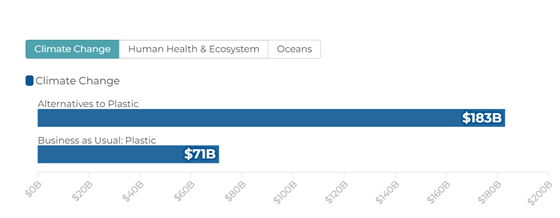
Plastics can reduce environmental costs by nearly 4 times compared to alternatives, in other words using plastics can increase environmental benefits
U.S. plastic manufacturers say banning EPS foodservice packaging would be a step backwards for the environment. EPS foodservice packaging is typically made with less material than alternatives (EPS is more than 90% air) and uses less energy and water to create. Lawmakers have instead focused on creating the infrastructure to recycle EPS and help create a more circular economy.
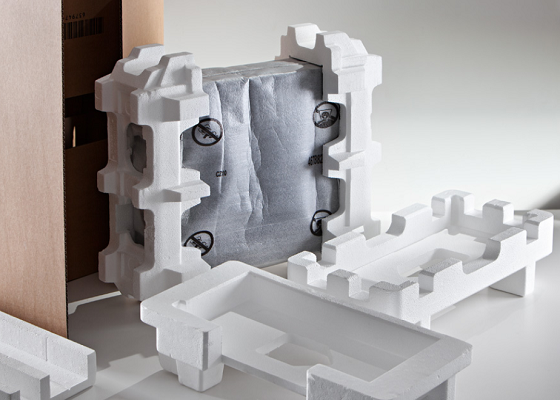
It can be said that EPS is closely related to our clothing, food, housing and transportation. EPS is used throughout our nation's economy to insulate our homes, pack our meat and fish, protect us while we ride our bikes, and even make surfboards. EPS packaging plays a key role during the COVID-19 pandemic, helping to protect much of our nation's vaccine supply and keep it cool in transit. EPS foodservice packaging helps keep our food fresh, hot and cold and ready to eat, which helps prevent food waste, the number one material that goes to landfill and a huge contributor to greenhouse gas emissions.
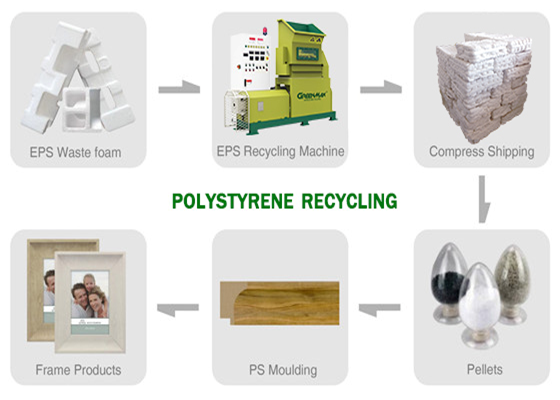
Facing the needs of different countries, different regions, different governments and different industries for foam recycling, we have been constantly learning and improving. Tolerating differences and understanding differences can GREENMAX team continuously improve themselves, so that GREENMAX customers can truly solve the pain points and difficulties of foam recycling through Inco Recycling. Foam recycling is not something that can be done by a simple machine. Faced with the problem of subsequent processing of recycling, it has become profitable. Inco recycling has also been helping our customers to maximize their profits.

QLS Group is a national warehousing and logistics company serving the white and brown goods industry with exceptional quality, personalized service, comprehensive security and reliability. In Australia, half of home appliance businesses rely on imports, and QLS Group not only provides door-to-door services and more, but also provides connections with world home appliance manufacturers and well-known local distributors.

In 2013, QLS Group established the E-cycle Solution subsidiary to help retailers recycle waste expanded polystyrene packaging. In response to the Australian Government's NTCRS (short for National Television and Computer Recycling Schene) program. They then found the GREENMAX team by searching the web for EPS densifiers.
Before contacting the GREENMAX team, QLS Group purchased 4 sets of EPS densifiers from South Korea in Melbourne, Sydney, Brisbane and Perth. However, due to the complexity of the machine structure, the after-sales service could not keep up with the problem, and some problems occurred. Warehouse managers often say that parts from manufacturers always take more than 2 weeks to receive, and sometimes they need to buy them themselves, not only that, but also need to pay for densifier maintenance.
In 2017, the manager of QLS decided to replace the old Korean EPS densifier with GREENMAX EPS densifier. Their warehouse manager praised the machine for its simple structure, ease of maintenance and high efficiency.

