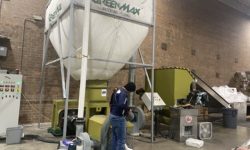
The Arctic is warming faster than anywhere on earth. In the 1980s, open waters account for only 1% of the sea ice in the central Arctic Ocean. Now it is 22%. Polar bears need sea ice to hunt, and the reduction in sea ice is statistically related to the weight loss of polar bears. However, data shows the total number of bears has increased from about 12,000 to 25,000. Why? Environmental protection. When it comes to environmental protection, I must talk about foam recycling, a way that can be achieved by using foam densifiers.

With the progress of society, people’s living standards are improving. we feel that life is becoming more and more convenient after we have plastic bags and foam disposable packaging in our daily lives. While bringing us convenience, it also causes pollution to our environment. This damage to the environment is particularly serious. What harm does foam do to the environment? Let us take a look together below.
The main harms caused by foam packaging are “visual pollution” and “potential harms”. The waste foam packaging discarded in cities, tourist areas, seas, and roads brings bad irritation to people’s vision, affects the overall beauty of cities, destroys the appearance of the city and the landscape, and causes “visual pollution”. In addition, foams can cause many other “potential harms”. If the waste foam packaging is thrown into the environment, it is difficult to degrade, causing long-term and deep-level ecological and environmental problems.
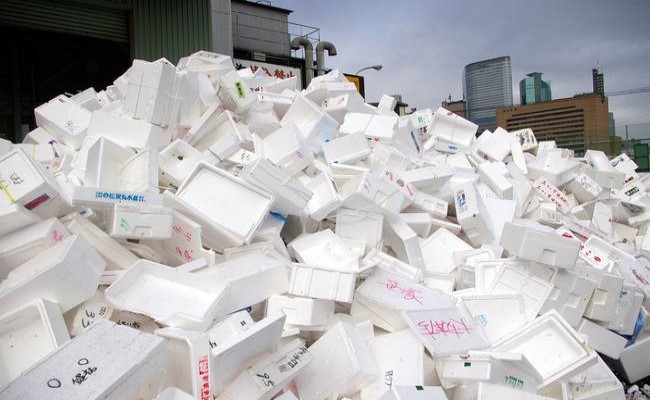
First of all, waste foam packaging is mixed in the soil. It will affect the absorption of nutrients and water, which will cause crop yields reduction. second, if waste foam packaging discarded in land or water bodies is swallowed by animals, it will cause animal deaths. This kind of situation is common in zoos, pastoral areas, and the ocean
Last but not least, it is never completely biodegradable because it is resistant to photolysis, and light will cause the material to decompose. At present, the main problem that people fully aware of is "visual pollution", but most people still lack the awareness of the long-term and deep level “potential harm” of waste foam packaging.
However, during the epidemic, although other industries are affected, the foam packaging industry is on the contrary. Due to the increase in express delivery and takeaway, the volume of foam waste has increased, and foam recycling is especially important. Unfortunately, there are practical obstacles to foam recycling.
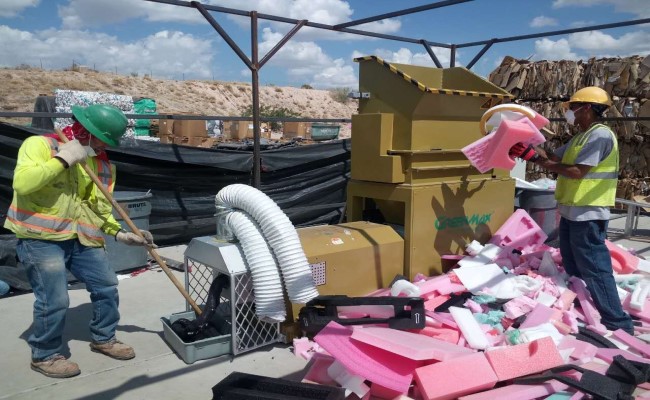
Density and pollution. The air content of polystyrene foam is 95%, so storage or transportation is not cost-effective. In addition, it is often contaminated with food or beverages and is difficult to clean. Fortunately, the problem of the low density of this material can be solved. It means a large piece of equipment called EPS foam densifier must be used to reduce the volume of EPS.
EPS needs to be processed before shipping. The process can significantly reduce transportation costs and make recycling cost-effective. There are two popular methods to make this material dense, either by heating or pressing. Each method enables cost-effective transportation. In addition, EPS is a by-product of petroleum.
When the price of oil is high, the value of this material increases. When the price of oil falls, the price of this material will also fall. Therefore, if large distribution facilities, furniture warehouses, or foam packaging plants produce large amounts of EPS, it may be cost-effective. Now that the processed EPS has been compacted, it has value and can be purchased by recyclers because it can be easily and efficiently processed and transported.
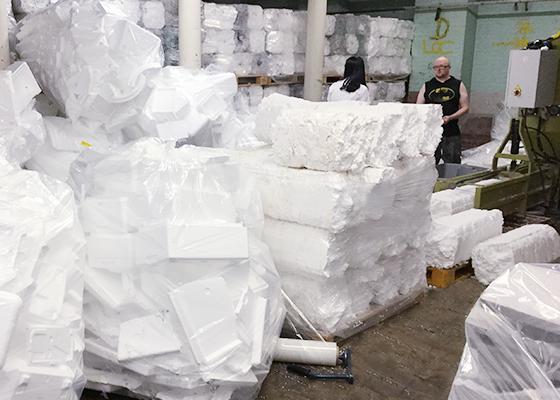
If you do not know how to choose a foam densifier, I would like to introduce a simple operation but high-efficiency machine. It is the GreenMax foam densifier MARS series. They use high-volume extrusion technology to reduce the amount of foam waste. Throw the waste foam packaging into the hopper of the machine, crush it into small pieces, and then fall into the screw part, where the crushed foam block is pushed out, and then melted by the heating part.
Eventually, it will become a hot melt ingot with a density of 90:1, which is easy to store and reuse in new products. It is mainly used for Styrofoam/EPS (Expanded Polystyrene), PE foam (Expandable Polyethylene), XPS (Extruded Polystyrene), EPP (Expanded Polypropylene).
Not only large enterprises, large manufacturers, distributors, and warehouses can all benefit from densifiers, but small businesses can also benefit. Retailers, malls, and shopping centers of all sizes, schools, apartment buildings, etc. are all considering using EPS densifiers to take advantage of the benefits of foam recycling. Climate change is a serious threat that we have always ignored. We should take it seriously.