According to statistics, more than 300 million tons of plastic are produced every year, which are widely used. At least 14 million tons of plastic enter the ocean each year, and plastic litter accounts for roughly 80 percent of all marine debris, from surface water to deep-sea sediments. Various marine organisms have been seriously injured and suffocated to death by ingesting or becoming entangled in plastic debris, including plastic bags, plastic foam. Plastic pollution not only threatens the life safety of marine life, but also has great harm to the natural environment and thus threatens human beings. Realizing plastic recycling and raising people's awareness of environmental protection has become a top priority. What kind of plastic waste is causing harm to animals in the ocean?

Table of Contents
Eating plastic bags by mistake
In the ocean, plastic bags look a lot like prey. Most marine life cannot distinguish food from plastic waste. Albatrosses and other seabirds, which mistake plastic for fish eggs, feed it to their chicks, who die from organ failure or starvation, malnutrition, or intestinal blockage. More than 90% of seabirds have plastic fragments in their stomachs. Small fish in the ocean usually prey on disposable plastic bags as plankton. These small fish are preyed on by medium and large fish, so that plastic bag fragments enter the food chain. , began to exist in the ecosystem, causing human disturbance to the changes in the number of species.
Tangled in plastic fishing nets
Ocean plastic pollution was found in 100% of sea turtles, 59% of whales and 36% of seals. Discarded plastic nets, some miles long, are dubbed "ghost nets" by fishermen. Under the action of ocean currents, these nets are twisted together and become "death traps" for marine mammals. They entangle and drown thousands of seals, sea lions and dolphins every year, not only that, but even destroy coral reefs, making the beautiful Corals are bleaching and dying, resulting in the loss of commercial fish stocks and an increase in endangered animal species. Therefore, fishery waste has become a hot issue of increasing global concern.
It will trap or kill wild animals in the ocean, including fish, seabirds, whales, dolphins, sea lions, etc., and even destroy coral reefs, bleaching and dying beautiful corals, resulting in the loss of commercial fish populations and the increase of endangered animal species.
Styrofoam waste breaks down into microplastics
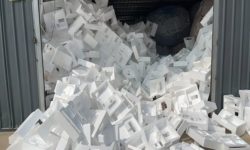
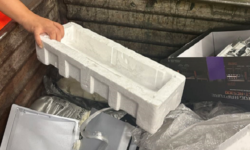
Many media including CNN in the United States and the Guardian in the United Kingdom reported that at the 2018 European Gastroenterology Academic Conference of the European Digestive Medicine Association, Philip Schwable and others from the Medical University of Vienna in Austria reported that in human feces samples The discovery of microplastics for the first time has aroused people's attention. The impact of microplastics has continuously invaded the top of the biological chain: Humanity. A large part of these microplastics is caused by ocean plastic pollution such as styrofoam waste. These wastes are decomposed into microplastics in seawater for a long time and are used by marine organisms. People ingest microplastics by eating seafood. In coastal areas, marine pollution is responsible for 250 million clinical cases each year. Contaminated shellfish kill between 50,000 and 100,000 people a year from compromised immune systems or cancer. Although no one can prove whether this situation is directly related to the microplastics produced by styrofoam, the potential danger cannot be ignored.

At present, GREENMAX attaches great importance to plastic recycling, especially the recycling of styrofoam plastic. GREENMAX recycles styrofoam from all over the world and provides styrofoam recycling machine to help more waste styrofoam plastic get out of the ocean and protect the environment. These styrofoam recycling machines use screw extrusion technology, hydraulic technology, hot-melt technology, etc. to recycle styrofoam to prevent these garbage from being dumped into the ocean and realize plastic recycling!