There are no more than twenty days before the opening of the Tokyo Olympic Games. Once the Olympics begins, there will be a lot of waste. Japan attaches great importance to waste recycling. The Japanese government has also worked hard to make the Tokyo Olympics the “greenest Olympics ever”. However, this is not the point, the lasting solution to the problem of plastic pollution is the point. Moreover, a polystyrene densifier will be a good helper.
Table of Contents
Current status of plastic recycling in Japan
The media continues to flatter efforts to green the Tokyo Olympics. The Project is to recycle plastic wastes including polystyrene plastic wastes, and then use recycled materials to make medals, sportswear, and even beds. According to reports, 24.5 tons of waste plastics were collected, which is equivalent to about 400,000 bottles of washing powder. These recycled plastic wastes can be processed with polystyrene densifiers to make new products.
Japan is the second-largest producer of plastic waste, producing approximately 9 million tons in 2018. Although Japan attaches great importance to recycling, data from the Independent Commodity Information Service (ICIS) Recycling Supply Tracker shows that the current total domestic recycling capacity is only half of that, and the actual output is still low.
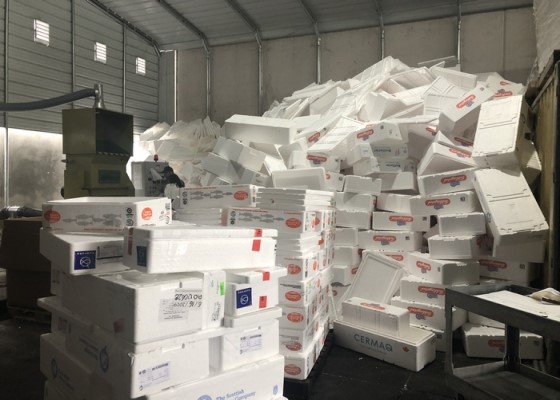
According to the data from the Environmental Investigation Agency in June 2021, 77% of the Japanese public believe that plastic pollution is one of the most pressing environmental problems of our generation, and 83% believe that legally binding solutions are important to solve the problem, 61% believe that Japan should play a leading role in promoting the new treaty.
Plastic pollution is a global crisis
According to data from the United Nations Commodity Trade Statistics database, Japan exported 1,018,219 tons of plastic waste overseas in 2018, accounting for more than 11% of its total annual plastic waste production. As in many rich countries, recovery rates are low, and environmental leakage rates are high. Now it is not just Japan, the whole world should get rid of the crisis of plastic pollution through recycling.
Every Country should first solve the problem of unsustainable plastic production and consumption, and then make sure that the plastics we use are designed for reuse or can be reinvested in the circular economy: bottles to bottles, packaging to packaging. Due to the obvious transboundary nature of plastic pollution, the economy-plastic pollution and the plastic value chain are both global.
GREENMAX EPS foam densifier is a good helper
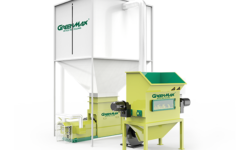
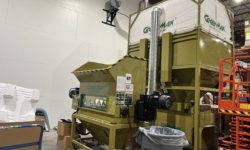
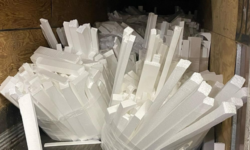
How to increase the recycling rate? GREENMAX EPS foam densifier will be a good choice. The EPS foam densifier reduces the foam volume with a compression ratio of 90:1. The compressed foam block can not only save storage and transportation costs but also can be effectively recycled. The GREENMAX polystyrene foam densifier is the best choice among many environmentally friendly and efficient machines for recycling polystyrene foam waste.
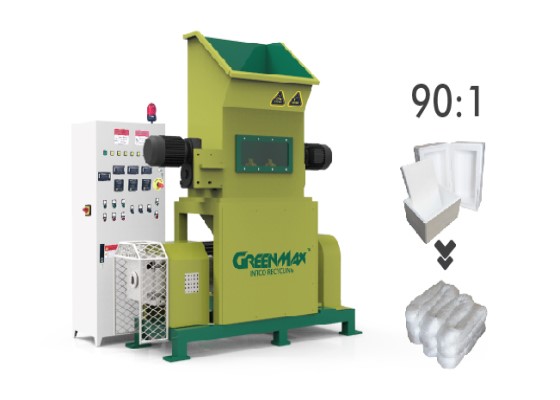
The EPS foam densifier uses a single shaft crushing knife. When the crusher blade works, the foam waste is cut and broken into small pieces, which are then pushed to the heating cylinder by the high-speed rotating screw. The screw of the foaming machine conveys and heats the waste material to a hot melt state, and then is squeezed and cut into fragments by a hydraulic cutting machine, which is more convenient for storage and transportation.
After a lot of analysis and comparison, practice, and testing, this model handles a variety of foams without replacement and frequent parameters. The EPS foam densifier is specially used for waste foam recycling, by adding heating parts to melt and extrude the purge block. GREENMAX polystyrene recycling machine can handle a variety of foam materials, such as EPS, XPS, EPE, EPP, and PSP food container recycling. GREENMAX recycles polystyrene in an environmentally friendly and efficient manner.