
Styrofoam (also known as EPS Foam or Polystyrene) is a highly popular plastic packaging material which finds wide application in packaging of food items, electronic goods, electrical appliances, furniture etc due to its excellent insulating and protective properties. Styrofoam is also used to make useful products such as disposable cups, trays, cutlery, cartons, cases etc.
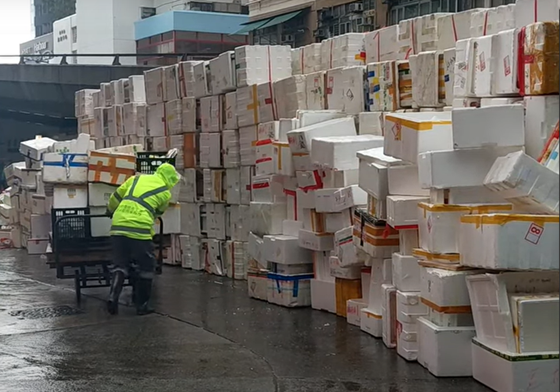
Despite the attractiveness of Styrofoam, municipalities and organizations are facing a growing problem in disposal of Styrofoam packaging and products. Being large and bulky, Styrofoam take up significant space in rubbish bins which means that bins becomes full more quickly and therefore needs to be emptied more often. Styrofoam is lightweight compared to its volume so it occupies lots of precious landfill space and can be blown around and cause a nuisance in the surrounding areas.
Although some companies have a recycling policy, most of the Styrofoam still find its way into landfill sites around the world. As per conservative estimates, hundreds of thousands of tons of waste Styrofoam is produced in the Middle East and sent to landfills each year.
Environmental Impacts
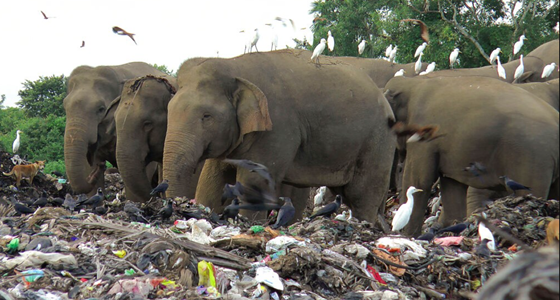
While it is estimated that STYROFOAM foam (or Styrofoam) products accounts for less than 1% of the total weight of landfill materials, the fraction of landfill space it takes up is much higher considering that it is very lightweight. Furthermore, it is essentially non-biodegradable, taking hundreds perhaps thousands of years to decompose. Even when already disposed of in landfills, STYROFOAM can easily be carried by the wind and litter the streets or end up polluting water bodies. When STYROFOAM foam breaks apart, the small Styrofoam components can be eaten by animals which can cause choking or intestinal blockage.
Styrofoam can also be consumed by fishes once it breaks down in the ocean. Marine animals higher up the food chain could eat the fishes that have consumed STYROFOAM, thus concentrating the contaminant. It could be a potential health hazard for us humans who are on top of the food chain considering that styrene, the plastic monomer used in manufacturing STYROFOAM has been classified by the US National Institutes of Health (NIH) and the International Agency for Research on Cancer (IARC) as a possible human carcinogen. Styrene is derived from either petroleum or natural gas, both of which are non renewable and are rapidly being depleted, creating environmental sustainability problems for STYROFOAM.
Recycling Trends
There seems to be a common misconception that Styrofoam is non-recyclable. Being a thermoplastic, it can actually be melted and molded into many different plastic items. At present, the recycling of Styrofoam (or STYROFOAM foam) basically follows the following process:
Segregation – STYROFOAM foam products are separated from other wastes and then sorted.
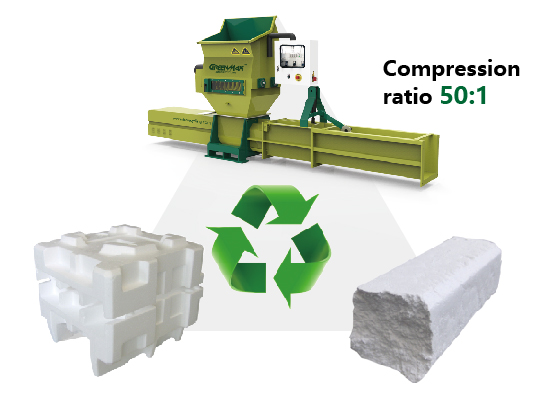
Compaction – The segregated STYROFOAM foam products are fed to a compactor in order to reduce its volume. Some compactor systems have a compaction ratio of up to 50:1, which means that it can reduce the volume by up to 98%.
Shredding – Larger pieces are shredded into flakes. Packaging “peanuts” – small STYROFOAM foam pieces used to cushion fragile items by styrofoam recycling machine– normally skip this step and are fed directly to the pelletizing machine.
Melting/Extrusion – The flakes are forced through pelletizing extruders where they are heated and melted, then allowed to cool in order to solidify. The resulting material can then be used, through reheating and melting, to produce clothes hangers, picture frames, DVD cases and numerous other plastic products.

Major Bottlenecks
Although the Alliance of Foam Packaging Recyclers have reported that the recycling rate for post-consumer and post-commercial STYROFOAM in the United States have risen to 28% in 2010 from around 20% in 2008, this value is still lower than most solid wastes. According to USEPA, auto batteries, steel cans and glass containers have recycle rates of 96.2%, 70.6% and 34.2% respectively. Because it is bulky, STYROFOAM foam takes up storage space and costs more to transport and yet yields only a small amount of Styrofoam for re-use or remolding (infact, Styrofoam accounts for only 2% of the volume of uncompacted STYROFOAM foams). This provides little incentive for recyclers to consider STYROFOAM recycling.
Products that have been used to hold or store food should be thoroughly cleaned for hygienic reasons, thus compounding the costs. For the same reasons, these products cannot be recycled to produce the same food containers but rather are used for non-food plastic products. The manufacture of food containers, therefore, always requires new Styrofoam. At present, it is more economical to produce new STYROFOAM foam products than to recycle it, and manufacturers would rather have the higher quality of fresh Styrofoam over the recycled one.
Silver Lining
The cost of transporting bulky Styrofoam waste discourages recyclers from recycling it. Organizations that receive a large amount of STYROFOAM foam (especially in packaging) can invest in a compactor that will reduce the volume of the products. Recyclers will pay more for the compacted product so the investment can be recovered relatively easier.
There are also breakthroughs in studies concerning STYROFOAM recycling although most of these are still in the research or pilot stage. Several studies have found that the bacteria Pseudomonas putida is able to convert Styrofoam to a more biodegradable plastic. The process of Styrofoam depolymerization – converting Styrofoam back to its styrene monomer – is also gaining ground.
Meanwhile, for the rest of us, we can start reducing our Styrofoam consumption by opting to use products that can be reused, such as bringing our own coffee mugs and food containers to stores that serve their food and drinks in STYROFOAM foam. A small change in our lifestyles can make a big difference for the environment.